Played sax for 60 years. I now have scarred lungs and can’t walk more than a hundred feet before I can no longer breath. It’s called saxophone lung, due to not swabbing my mouthpiece. The resulting bacteria and mold growth permanently damaged my lungs. CLEAN YOUR HARPS FREQUENTL AND THOROUGHLY not just wiping them down.
4 Likes
thanks! didn’t consider this aspect - will clean/disinfect my “main” harps more often!
found this news report from 15 years back:
definitely a wakeup call - especially since when you google “harmonica lung” all you get is videos about the health benefits of using harmonicas.
I think, the reason is that harmonica is a much more niche instrument (if you try to play it seriously/systematically, that is)
Thanks for the heads up @GmanG. Sorry to hear about your own health issues, I hope that something can be done to help you. It is indeed a cautionary tale. I need to look into the best ways to disinfect my harps, my cleaning regime has been a bit haphazard hitherto. Maybe dipping in Listerine would work. Hopefully this will prompt further discussion.
1 Like
Anyone have tips on how to clean harmonicas and how often?
Btw, something I’ve been doing that (after posing the question in a neutral manner to Grok) would seem to be beneficial is blowdrying the harmonica after use - it reduces the moisture, this preventing the mold environment. Still, I will need to do “actual” cleanings - previously I was more focused on just lip/inner mouth irritation or whatnot, this upps the stakes.
I replace any wooden comb as they are trouble. I dip my harps in alcohol 10 to 15 seconds and lightly tap them out. They stay clean and play well, especially if I warm them with a light going over with a hair drier if its cold or humid. Wood and moisture are a bad combination for a number of reasons and I do not have to deal with air leak they may cause. I live in a dry environment and the alcohol is gone in 15 seconds on warm days and no hair dryer is used.
I use alcohol on the cover and bought a cell phone cleaning UVCB light that kills bacteria. Same thing hospitals use to sterilize rooms.
I was having the same problem with a Crossover so the plates got a light sanding and I tried coconut oil to avoid the lip drag. Its the best thing I have found. Humidity here can be single digits here and moisture on the inner portion of my lips drying. Tried about everything and this turned out to be the best for the harp and my lips. Safe and effective I/M/O.
1 Like
I always rinse my harmonicas in hot water right after I use them. I don’t have any with wood combs so no worries there. If I’m out of town for a gig, when I get back in town I clean them in a small ultrasonic cleaner I got from amazon. It has UV light built in, so hopefully this stops any mold/germ issues.
Any cleaning needs to be focused on the inside (reed plates) that’s where the problem would be.
GmanG, I’m so sorry to hear this, and thank you for sharing it with us.
Does a plastic comb harmonica need to be taken apart to be cleaned? Is a soak in hydrogen peroxide a good idea, and is that enough?
If it needs to be taken apart, how often should it be done?
How about those Seydel disinfection bags?
I’m worried that if I take it apart I won’t get it right when I put it back together.
Thank you for this! I’m going to clean my harmonicas more often -I have s spray container of alcohol I occasionally use— I’ll do it more often now.
2 Likes
Plastic combs are no problem. I take my harps all the way down and clean plates, comb and inside the reed plates about once a month, especially where they fit into the plates, a spot that can be over looked but has build up. I look the reeds over and use a soft tooth brush but am careful not to get into a reed. The harps always play better as any moisture that has dried is removed. I have a jar that can hold enough a harp standing on end and soak for about a minute. I have never had any problem or unpleasant odor. I dip mine twice a week as it only takes a minute. I do not use water at all.
1 Like
Hi everybody.
I could You reccomend Hohner service workshops.
I was on their workshops on Trossingen Harmonica Festival 2025
They teach verry similar as on this video:
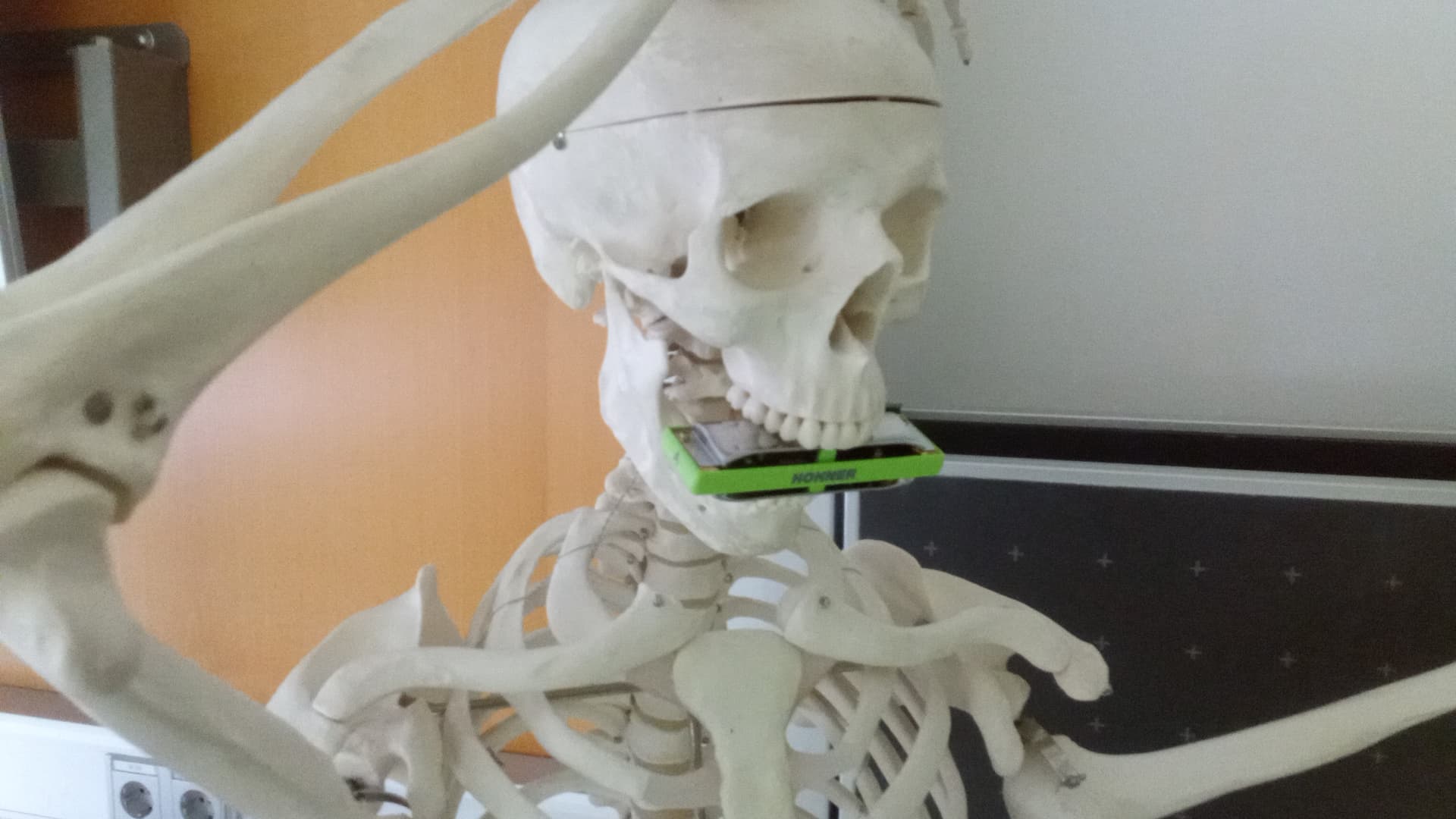
That was takes place in biology classroom 
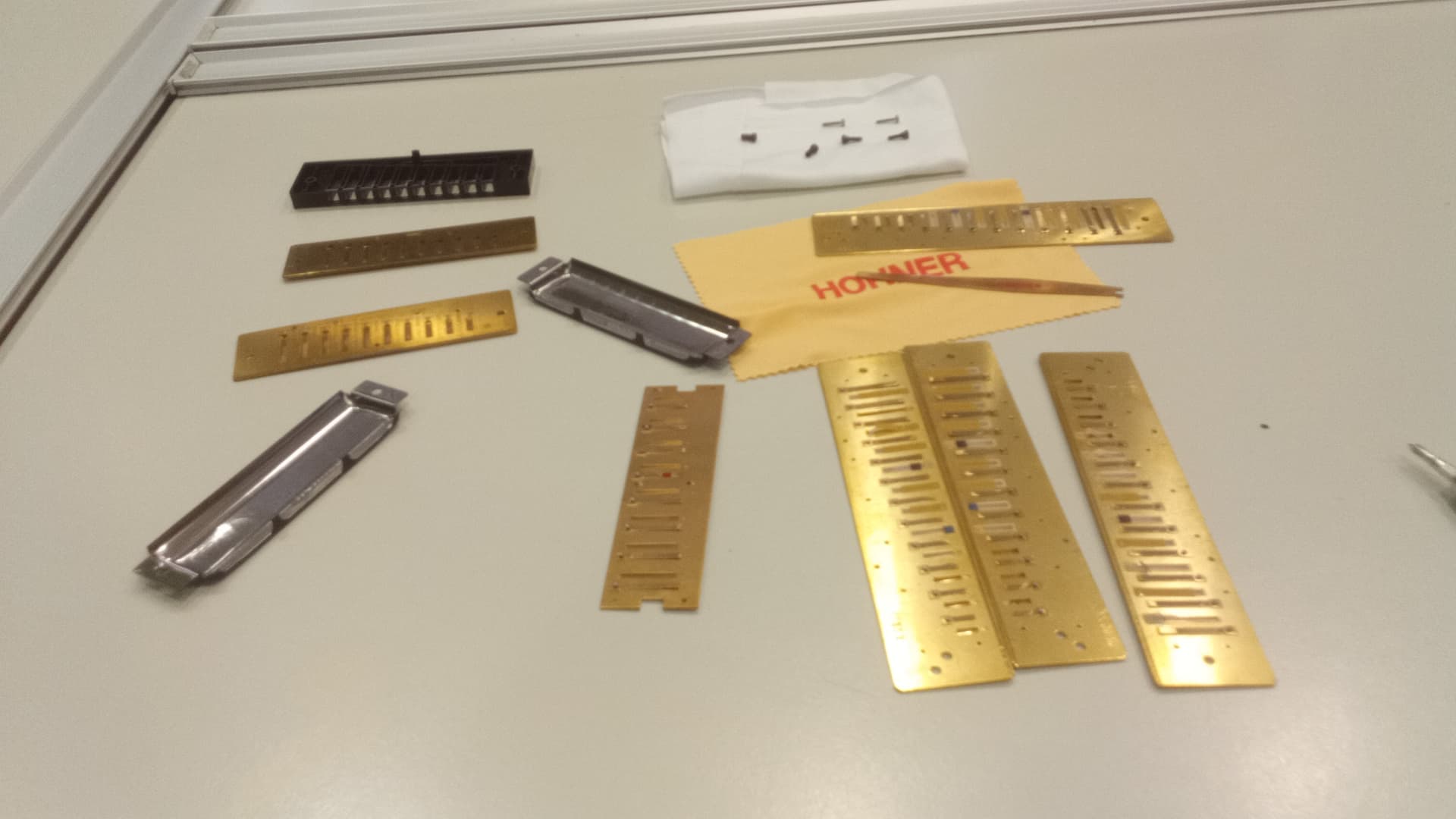
We’ve got diatonic harmonica to adjustment and clean
3 Likes
Did you sand the plates yourself? How do you do that without damaging the reeds?
Hi @Raynman11
I am sure that @scott4 will give you all of the details, but basically you need to know that only the plate with the the draw reeds (the bottom plate on a blues harp) is sanded, and then only the side that does not have the reeds on its surface (i.e. only sand the side of the plate that presses against the comb). The other side has the reeds exposed and does not contact the comb. The sanding of that “exposed” side would not help to prevent/reduce air leaks.
The plate containing the blow reeds is not sanded at all.
Your nailed it. Only sand the side that has no reeds. Go in rotation, both directions, very easily. I used 1,500 wet and dry. The places that are darker are a slight recess. ideally you want them all gone. I place my fingers on the reed hold down and one in the middle. If you have a large spot that when the claws are needed. Rockin Ron can sell you the tool kit with the claws in it. No much cost and worth the money. If it seems your not getting the harp airtight and well tuned I suggest you send it to HARPSMITH, When you get it back it will be as good as it gets.
I played Trumpet in grade and middle school/and tuba/sousaphone in middle school. i cleaned my interment once or twice a month, and my parents were divorced! The trumpet required the sink, the tuba and sousaphone the bathtub!
So, harmonica deep clean is a cup or small bucket with vinier water to soak for ten minutes?
1 Like
if you just take the covers off, give the reeds a gentle wipe with some isopropyl, then put the covers back on. Easy peasy. Usually when I start a new hobby, I dissect whatever I’m playing with if possible, obviously can’t disassemble the surfboard, I guess you could but…