Please help find a fast, efficient way to identify the Key of a song. I have to move fast to find a key.
5 Likes
Use a tuner
1 Like
Most efficient way is just to hear the key instantly. That needs absolute hearing (can be trained). I’m training that hearing for couple years and now I can not bad at all guess keys: E-major, G-major, C-major, A-major, a-minor. Other keys are still confusing for me. How to do that:
- Build personal playlist sorted by key and listen Your favorite music by key. One key for a month or other period.
- Find keys of music that playing in radio anywhere (on public transport, shop, waiting in queue) using some handy musical instrument (for example onscreen piano on the phone).
Thats about absolute hearing.
And about finding key:
- Use simple tools:
online (tunebat, google), offline (mixxx dj software) - Custom method by harmony
2.1. Learn bass notes
You can try to hear main bass note for whole song - this is key of song. If that fails or You want to proof key, then go further…
2.2. Then learn chords progression
2.3. Then key results from progression - Custom method by melody
3.1. Try to play all notes from melody
3.3 Then if You have 7 different notes then probably You can guess the key
3.4. If there are less notes: Try to improvise and find other notes to achieve 7 notes.
3.5. Then You can guess the key..
You can use all method above for one song to be sure.
When You have guessed key. Then try to play-along and improvise on that key. If fits then You can be 100% sure for key.
Also keep in mind that:
- Key can change on during song
- Some songs can (without key change) have ambigous keys because of mode.
For example rock progression: C Bb F
We can say that this is in C-key because main bass note is C, but this isn’t standard ionian C-major key. This will be C-mixolydian major key.
Or we can say that is F-major because all chords (and probably melody too) is from standard (ionian) F-major
Or other example: dorian mode.
If we have progreesion: d-minor G-major chords.
Then we can say that this is d-minor dorian mode key because of main bass note d.
But we can also say that this is standard C-major key. - There also non-european scales and harmonic-minor scale. This bring some confusion to key guessing.
- And there is also jazz: Key of song is that key which brings as few as possible inline sharps (#) and flats (b) in sheetnotes of melody.
- Most of songs ends with key chord/bass note
- Many songs starts from key chord
This reply is little bit shortened. I hope to find some time to record with examples or describe it deeper.
Or maybe You have example. I will describe my process of guessing.
3 Likes
Jan - I can not THANK YOU enough for this exceptional explanation! Your processes give me a start to work on this skill of identifying the keys. I currently play in 3 different bands. They all play different genres of music, with some overlap. Often, they deviate from the setlist and just start playing a song, without any rehearsal, etc. So I need to find the key fast without anyone telling me. I will work on this and look forward to learning more from you. Thanks again, Rusty
3 Likes
Hi, thanks
In the band I’ve got another method.
Stay behind pianinst or in front of guitarist.
You can see what they play. Pianinsts knows that method and for hint he will play by one finger main bass keys or pretend to play (just keep finger above) note of song key.
Looking at guitarist left hand works good when there are no stage. For example spontaneus friends playing or in small church. Then You can stay with community close as possible to band. Sometimes i’ve played that way. Works nice if there are no drums and PA.
In jams works pretty smartphone onscreen piano on the headphones.
…or just scream: “Hey bro, what da key?”. Screaming on the scene is fun. Vocalist can singing give You the answer  so that will be part of performance
Good luck
1 Like
I understand thanks.
Yes - I play guitar too so sometimes I can pick up the key that way.
Be well.
2 Likes
HAHA! Yeah man - I will scream when I can!
3 Likes
Hi August,
I downloaded an app called Ear trainer master from Apple App Store. You can set it up for the instrument that you use and it has a lot of settings and quiz features that helps you learn how to spot the songs key signatures. Good luck.
1 Like
If I need to find the key of the song being played, i usually will start out on a F harp and go around the circle of fifths until I find a chord that seems to be in harmony with what the band is playing. Ear training and practice are definitely useful, and the best guess is also a good thing. I need to physically hear the changes and what chords the band is playing to really be able to decide what key the song is in (what the one chord is,) And then choose a Harp.. Try to remember the one cord is always the same as the key of the song that the band is playing in . If the band is in the key of G, then G is the one.
3 Likes
Diatonic harmonica isn’t good for me to assist key guessing. Chromatic play is difficult. Combined with brain overload from musical-mathematics is too hard for me, but when I have only harps then I’m starting from C and trying to play chromatically bass notes/melody/scale to what is played. In some keys (eg. Eb, Ab) that guessing is horrible to hear. When I have guessed key (often wrong). I pick harmonica (often much closer to right key than C). Then I try to play in first position. If fits - voila. I guessed key. If not, i’m trying to play in other positions. If fits - voila. Keep playing. I don’t even wonder what key it’s in. I just think: OK. I’m playing on low Eb harmonica on position: e-minor. I don’t need to know which is the real key. But maybe I want to switch harmonica and play in other position then I can calculate concert-pitch (real) key. In this example it will be g-minor. So maybe I pick Bb harmonica and will play in first major position or F harmonica on third minor position. Or go back to C and play in second position with deep bending.
I can add to my previous post that mixxx dj software can assist You to build playlist from Your offline MP3 collection. Just copy all mp3 to new folder and put key of song to album tag. Then You will get on mp3 player/phone albums with keys. Mixxx work pretty nice. But mistakes are possible. When You will listen key album and You will find mistake. Just delete that mp3. Then You will got albums with right keys for further listening.
@davidkachalon
Idea to play chords is verry simple but so inventive. Thank You for that idea. I think that will just works. I think that we can use fact that we can play three chords on C harp: C major, d-minor, G-major. For example band is playing chord progression: F-major, C-major, d-minor, Bb-major. (But I don’t know exact chords and key for now). Firstly I will listen that progression and it’s easly to map this to numbers without any note/key guessing. I - V - vi - IV (or C-G-a-F if You will think in C like me). OK. I know progression*** but don’t know key. I will pick c-major harmonica and try to find which of that three chords fits to some chords in that progression. OK. I Found: vi = d-minor. I will caculate key = d-minor - vi = F major. I will pick F major harmonica and play in first position. Fits. key is proved. Now I can switch harmonica to Bb and play in second position to get more bluesy sound.
*** about progressions
apart from training absolute hearing there are verry usefull is to hearing chordal progressions. Firstly I’ve tried to hear chords when songs are strictly in diatonic-modal harmony (I, ii, iii, IV, V, vi = C, d, e, F, G, a). I can easly hear that each of these chords have specific role in harmony and builds specific atmosphere. By that atmoshere I can determine which is that one of six steps. Next level was to train-up ability to hear atmosphere of chords out of that set but still in simple pop music. For example there are most specific chords: E-major (III) - often at the end of progression, dominant atmosphere. f-minor (often in country occurs after F-major - often with pause - builds atmosphere of unaswered question for me). Bb - for rock progression trick. and others. Then I’ve tried to find all other exceptions still in pop/rock and other simple music. And next step in learn to hear progression was to apply that knowledge in jazz. I’ve nicely suprised that this works. f-minor atmosphere from country music is similar to atmosphere of f-minor (in C-key) in jazz.
1 Like

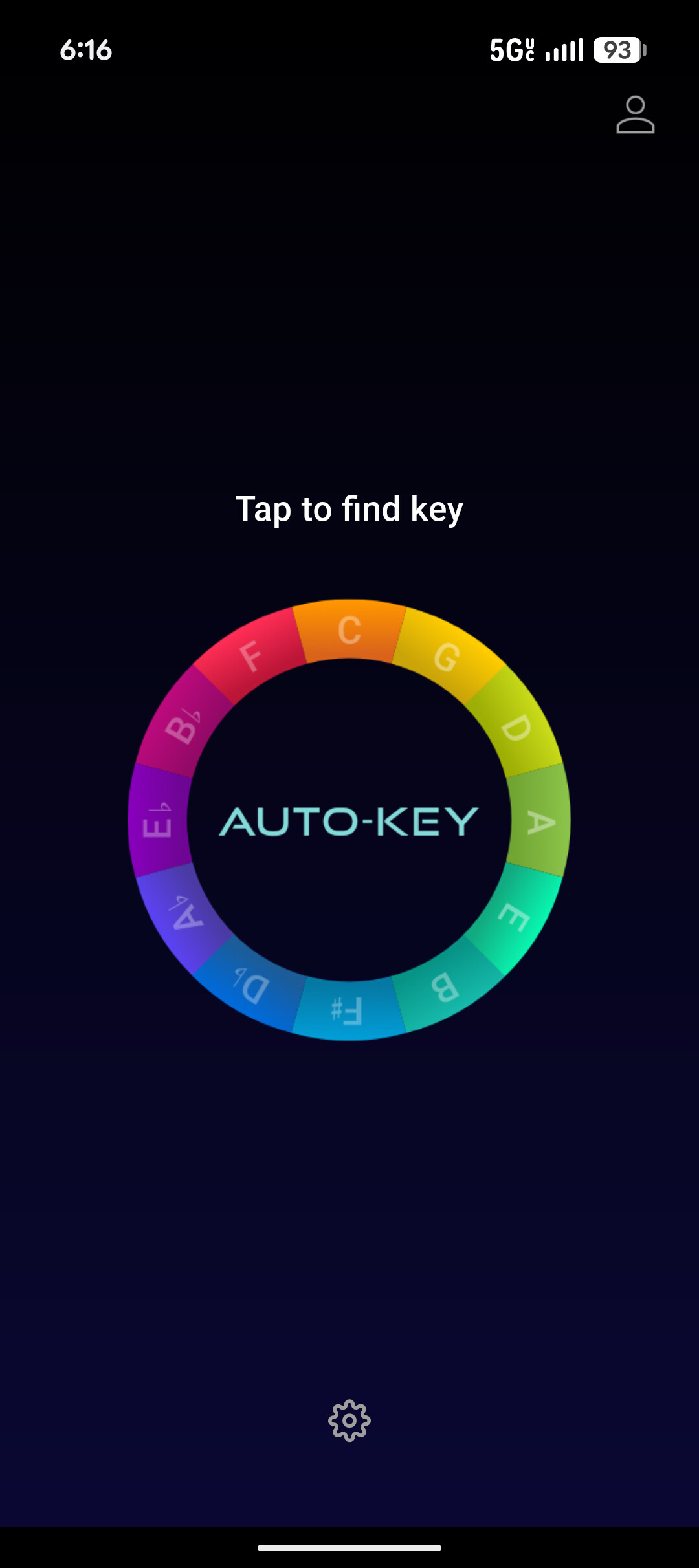
I cannot install that app. Maybe my phone doesn’t support it. But I guess that app and others uses same or similar algorithms as mixxx. This is named libkeyfinder, based on revolutionary white-paper from Ibrahim Sha’ath (2011) https://www.ibrahimshaath.co.uk/keyfinder/KeyFinder.pdf
He handed on a silver platter recipe how to make key guessing app.
In short that works like that: waveform >> chromagram >> notes compressed to one octave >> scale & key >> key & mode
This is what we can do by building notes set from melody.
I hope that our brains are much more powerfull in that area than computers… yet
1 Like
@teamaugust lots of great answers here already!
Want to point out that you’re talking about two separate skills that need to be developed, imo.
1.) Identifying what key song is in.
Play a song pause. It hum the note that is the place of most rest and finality that you feel, and that note represents the key of the song. If you play that note on the piano then that’s a very simple way to know the key of the song.
And your situation which I’ve been in many times, you don’t have a piano! So what I do is, I hum the note and then I try to find that note on the Harmonica and that note I can figure out the name of in relationship to what key Harmonica I have. And that brings us to skill number two:
2.) Identifying which Harmonica is best for a song.
Because with Harmonica, this is a bit trickier than with other instruments because we have different positions that lend themselves the most easily to different types of tonalities.
So skill #1 told us the note name of the key. But then depending on whether the sound best employed is major or bluesy or minor or minor bluesy, that’s gonna correspond to a different position on the Harmonica and then we have to figure out which Harmonica will give us the note name that we’re wanting for the key of the song!
All that to say, your question as it relates to a beginning harmonica player, has a whole different set of challenges from what a beginning bass player or beginning pianist faces in this scenario.
1 Like
Thanks Guys. Yes I downloaded an app that identifies the Key. That’s a big help. I also use it to quiz myself when I hear a song and guess the key first.
Regarding Which HArp to use: I pretty much use 1st and 2nd position. 3rd Position with a Harp 1 full step lower then the key of the song rarely seems to work for me, and often takes me far into the high notes on the right side of the harp.
Often, I hold 2 Harps in my fingers - so I can try 1st or 2nd position to see which sounds better and has the right note selection.
I see that Luke is a teacher. Maybe we could do a WhatsApp lesson if its affordable?
Thansk again everybody for you kind responses. I keep learning!
2 Likes
Thanks @Luke. Humming works fine.
Did You tried silent/imaginary humming?
Another hint in key finding is instrument specific knowledge.
I thought that I’m learned absolute chord guessing until I’ve discover that my absolute hearing was just guitar chords recognition. I heard some tune and I was sure that guitar plays E. But i’m surprised that was D. Guitar was tuned whole tone down. Each guitar chord sounds specific and that can be a hint if default tuning was applied.
Harmonicas have specific sound too that can be hint in key finding. If we hear high tone squeaking second-position solo then we can predict that this is harmonica between D and F, so key will be between A and C.
Bass guitar also have own specs. If we hear very deep bass notes - we can be sure that bass guitar is 5-string and lowest string plays. So notes will be from B to D#.
Vocals have specific atmoshere too. We can place at opposite poles high woman E-major vocal and G-major low man vocals.
1 Like
I used to worry about keys and which harmonicas to use, but now I have a similar, but slightly different approach.
Whenever I’m trying to learn a song, I first hum it or whistle it. Once I can get a hum or whistle which sounds pretty close, then I go to the harp and try it in first position starting on the 4 blow. From there I go up or down a hole, playing the same interval of notes I hear in my head until one sounds right or close.
If that doesn’t work to make it sound right, then I start moving up or down through different positions doing pretty much the same thing. I go in order. If 1st position doesn’t work, then I go to 2nd. If that doesn’t work then I go to 3rd and 4th. Since 3rd is tricky on the low end starting at - 3" as the root note of the minor scale, instead I will go up to the - 6 and see how it goes from there. 4th position is usually my last stop before giving up 
Somewhere in the sequence of the first two positions, something usually starts sounding right, though likely in a different key from the original, since I play a different key harp every day. If the first two positions don’t get anything, then the song is probably in a minor key and the 3rd or 4th will likely sound right at some point.
One of my most valuable lessons has been @Luke 's suggestion to think in terms of intervals. Once I have the intervals down, it doesn’t matter what key I’m in, I can play the song by muscle memory, and it will sound right, though not exactly like the original.
In short, it seems to me like the KEY of the song isn’t as important as getting the INTERVALS and the TIMING right in order to be able to play it and make it sound halfway decent.
What does everyone else think?
Should a song be played in the key it was written, or will any old key do? 
2 Likes
I’m unable to contribute anything meaningful to the thread, but I’m encouraged by the discussion. My apologies for finding pleasure in the misfortune of others, but I can’t tell you how pleased I am to discover that people far more talented, informed and experienced than me, have difficulty identifying the key of a song. I thought that you all just instinctively knew.
4 Likes
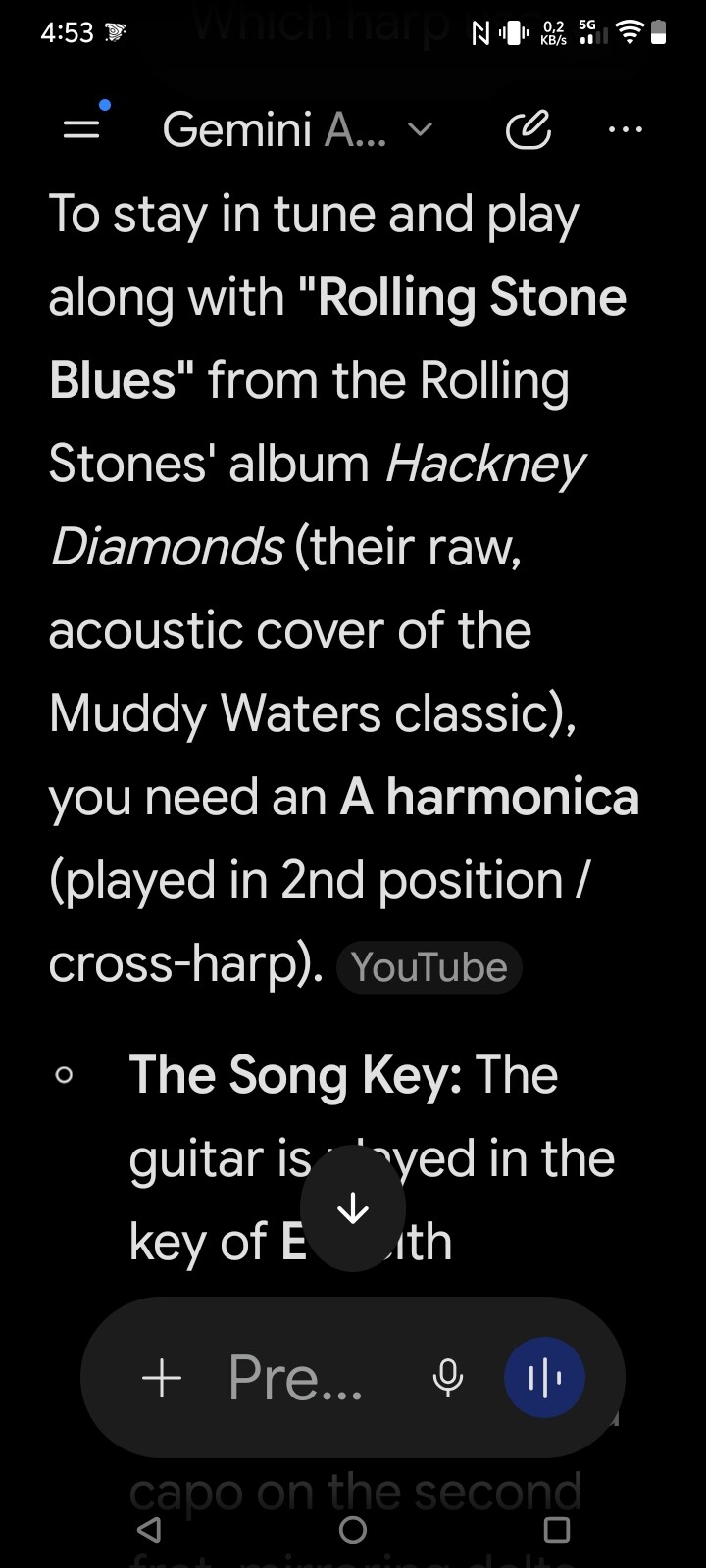
Thanks for this great help folks. Yes using the app to find the key and also AI is an easy method. The catch is as you know sometimes we need to find the key really fast at the start of the song when the band just starts playing haha! When I get desperate I blow the four hole and listen to weather the note is too low or too high for what I think is the main note in the song and adjust from there
1 Like
@ortizvalor , @PapaCurly
Thanks to Your posts I’ve reminded by myself further important things.
- Genre-key associations
Blues and rock guitars keys are often in the vicinity of E (A,E,D)
Because E major chord is most bluesy in guitar.
Also most of hard rock songs are in A.
Traditional jazz tunes are often in vicinity of Bb (Eb, Bb, F, C) because trumpets are tuned in Bb.
So @davidkachalon methods with switching harmonicas around circle of fifths can be improved with genre associations. Sometimes will be better to start from E instead of F.
- Instinct
Instinct works when we collect many input data from environment and associating it with many knowledge factors with with a relatively small share of conscious thinking. But in that thread we want to name all these factors and input data and grab them quite consciously. But there is another thing. Synesthetic associations. Every key has own atmosphere. In process of key guessing development our imagination can create own associations of key with other senses (tactile, taste, sight, smell). For me E key is more bright than G. Sometimes that helps with key-guessing. About coulour-key associations writes Alexander Scriabin in beginning of XX century ( Clavier à lumières - Wikipedia ). A misunderstanding resulting from an incorrect translation from russian language persists to this day. He means keys (tonalities) not notes. That make sense.
3 Likes