So, I’m having a hard time learning trills and I realized that there is very little advice on the subject online.
I have a lot of trouble controlling my speed, and balancing the two notes of the trill.
Do you have any tips on this ? How exactly should I practice ?
@toogdog - the advice on lubricant is solid! For me, a lot of the time I wet my lips and make sure to “warm up” the harp I’m playing.
Progressiong Training - starting super slow and practicing sliding between the two notes is a good place to start. You want to make sure you are hitting both cleanly. Then of course raise that speed slowly.
Technique - I prefer the head trill. It lets me hit the notes cleaner, control speed, and is more stable all around. The musician Jason Ricci has a great video on youtube reviewing the technique and showing a good example of different styles of trilling, especially the head trill.
Thank you both for the tips ! I’m not sure that the lubricant is going to do the trick for me because my real problem is balancing the two notes but I’m going to try it anyway. I’m also going to check the video thank you !
@mauraulucien - the fact that you’re noticing the imbalance is GOOD - your ears are OPEN. Bravo!
@HappyHarpist’s advice to SLOOOWWWW IT WAAAYYYYY DOWN is spot on. Anytime you’re wanting to improve at anything SLOW IT DOWN!!!
Can you play it balanced really slow? Play it at THAT speed for a couple minutes. Then try a little bit faster. Still balanced? Great! Not balanced? Slow it back down to where it sounds balanced and practice it at that speed for a couple minutes again.
Do this every day, and in a few weeks you’ll be shocked at what it does for ya.
Other things to play with:
@HappyHarpist mentioned he and Jason Ricci like the head shake. I don’t. (It gives me a headache, lol.) But TRY it all:
Head
Right hand
Left hand
Both hands
Some combination of head and hands?
ALSO, While you’re slowly trilling, play with your tongue position. Try slowly moving the back of your tongue up toward the “Kk” zone, try lowering it like when you yawn, try different vowel shapes.
Keep relaxed, patient, and have fun playing and exploring this.
You’re on the path my friend. Keep up the good work! Rock on!
To add to Luke’s answer…. I am just getting my trills down so I’m not speaking from great experience. That said here is what worked for me as mentioned above…
moist lips
warm up the harmonica and the player
slow down
3 is what I wanted to touch base on and add to - when slowing down, do it with rhythmic accountability still
For example if the track you’re using or metronome is at for example 90 bpm. Start with half notes in time them speed up to 1/4 note then 8th, 16th etc…
I was winging it in the beginning without rhythmic accountability and it made it difficult to transition out of the trill into the next phrase. Once I practiced with rhythmic accountability transitions became easier.
If it helps anyone, I’m also struggling with trills a lot. My two notes are also imbalanced, I can’t keep a tempo, my trill is still very slow, etc.
What I have been doing almost daily now for maybe two months, is working with a metronome. I start at 120bpm and try to reach each note on each beat. I repeat 2~3 times and then I increase the speed by 30bpm, until it becomes garbage.
Recently I have switched to instead of simply repeating a -45 trill, do what Luke’s have us practice in one of the Blues Train lesson: linking -34 45 -45 45 trills. I find this way harder so hopefully this will help in the future. The other advantage is that as you do a draw trill followed by a blow trill, draw trill then blow trill, you don’t have to stop. So I do 1 set of that and then increase the speed on the metronome if I can make that set approximately correctly.
Working with the metronome helps me working the trill on beat and keep a constant pace and starting at low speed helps to slowly build-up my technique. But improvements have been slow I have to say.
I never do the head shake thing as I have had a neck injury for years. I prefer to let the harp do the work. The way I do anything is start off very slowly and build up the speed it works for a vast amount of techniques. I think that’s the best approach I hope this helps
I can’t believe I wrote that message 2 years ago. Practicing the trill is still part of my technique practice routine with the metronome and seriously, in 2 years it feels I have made 0 progress! I can’t hold a trill at 260bpm which is not fast for a trill… This is really my nemesis! I might be able to do proper tongue blocking blow bend throat vibrato before I can do a proper trill…
I’m not good at trills either, or any other little party tricks like that. It seems so easy when other people do it. Luckily, I don’t really need it for the tunes that I normally play, but I do include it my practice sessions without much success; it just sounds like I’m trying to show off.
I know that when I first learned how to do warbles, I had trouble with it. In my case, I have poor fine motor skills due to my autism so I can’t coordinate my hands very well to do a warble with both hands as a result of this. Doing warbles with my head also makes me feel dizzy. I felt like I was out of options until I tried doing it with one hand only.
I play with the harmonica in my left hand and numbers on the top, but I switch to my right hand when playing warbles. My logic behind this is that I have a stronger amount of control in my right hand than my left due to it being my dominant hand. So I thought that because my right hand isn’t doing much when I play other than hand wah and tone shaping, I should do my warbles only with my right hand. I ended up liking that sound and I’ve played them that way ever since. When I’m playing live, I keep a decent grip on the harp and the microphone with my left hand while I’m shaking my right hand. To those who’ve seen videos of me playing with the cover band I’m in, I actually do play warbles like this.
For years, I thought that I was the only one who played them that way until I met my teacher, Todd Parrott. I do remember Terry McMillan used one handed warbles a lot as well in addition to his head, but he’s holding the harp and shaking with his right hand (because he played with the harmonica upside down). I’m not sure if there are any other one handed warble players, but those two alongside myself are the only examples that I could think of at the top of my head.
@KeroroRinChou thank you for the tip. I’m curious to see how you do it. I do not see myself switching hands, if this is what you are doing. This feel too slow when transitioning fast from a note, you would play left hand, to a trill/warble played right hand.
For me, what is helping is having both hands on, and actually using the right hand to lead the trill/warble motion. But when I practice, I train only with the left hand with the idea to improve my left hand control of the harmonica. But your feedback makes me think that maybe my approach is dumb and I should mainly practice how I am actually playing it.
On this subject - I’m doing a deep dive on Sonny Terry for the last six weeks or so just focusing exclusively on his stuff and obsessively.
I think he may be the only player who makes use of using the tongue for shakes of two adjacent holes.
Hear this on walk on when he goes to the four cord. It has a slippery sort of a sound to it and one of the nice things about it is without your head or your hand moving you can add hand wall to it, which is a really cool sound!
I’ve been working on split shakes for a long time mostly split threes. I like the sound of. But I have found it incredibly difficult to do a split shake onto adjacent holes! Starting to get it though…
@Luke I’ve been working a bit on split shakes, but I’m not really sure I “get” it. I can do splits and (I think) shakes, but I’m not so sure about the combination. Any exercises you use that you find useful are welcome!
Yeah, the easiest split shakes, I think, are the split-3’s, but you can do them with any width.
I started by playing a split and then trying to just play the left side and the right side by moving my tongue left and right and then just speeding it up.
You can play it kind of dirty or cleaner. The dirty ones are what I call “shimmers” in the Beginner to Boss course TB-ing module.
Next time I’m shooting some video I’ll try and make a little example for you!
That’s the way @Luke seemed to explain it in his message to me. I had somehow thought you move the harmonica back and forth in your mouth, using either your hands or your head (I was using my hands; shaking my head made me a little dizzy).
I’m going to try the tongue-blocking method and see if it works any better for me. I wasn’t doing so well with my hands, which is why I asked Luke about it.
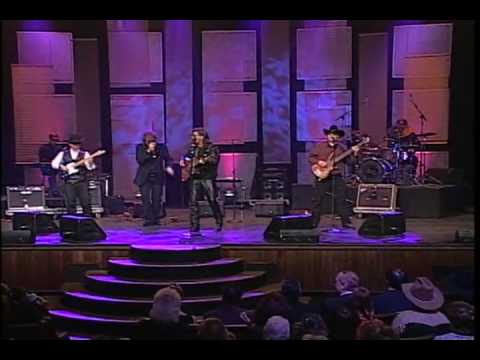
This is probably the most well-known example of how Terry McMillan’s warbles sounded like (with both the head shake technique for slower ones and the one handed technique for his faster ones):
Here’s an example with Terry using the one handed technique with a microphone:
Yeah I’ll try and make a lil vid next time I got a camera set up, but it’s rapidly alternating between two non-adjacent holes using tongue switching.
Can be done, clean or dirty, and when done dirty it’s what I refer to as a “shimmer.”
Basically, when you’re playing it clean, you’re keeping the tongue anchored in the middle on the holes that it’s blocking, and when you’re playing it dirty, you’re just moving the whole tongue so you’re allowing those center hole(s) to kind of come into the picture as well.