I’m trying this out and struggling. So far, I feel I can get better tone using the underside of my tongue. However, if I stick with it and want to learn to bend while tongue blocking, will this cause a problem? Thanks
@wannago I have never heard of anybody using the underside of the tongue. Seems so hard?
when I was learning to play single notes, I thought tongue blocking literally meant you had to block the unused holes with your tongue. This “kinda” worked but led to the harmonica quickly filling up with spit. Only later did I realize tongue blocking was more of “directing the air” as opposed to actually touching the holes. I wish this was explained more explicitly in videos since I think it’s one of those things everyone “assumes” is obvious.
Tongue blocking is covering the holes. Not sure if it’s a language thing. I think you would greatly benefit from doing Lukes BTB course. It has a very clear section on tongue blocking where you can see Lukes tongue pushing against the replica holes. Other sections on rhythm would be invaluable to you. You have come so far its time to become a BOSS!
2 Likes
right but, if you actually push your tongue against the holes that leads to a lot of saliva and the harp clogging up, at least it does for me. All I know is my tongue somehow “directs” the air by blocking the other holes but not touching them. Initially, because of this I thought I was puckering but no, puckering means making a super-tiny hole with your mouth and that’s not what I’m doing - the harp is inside my mouth.
Also, I’m specifically playing from the left side of my mouth, which also leads me to think I’m in the tongue-blocking camp (or at least, somewhere near it)
Hi Wannago. That’s crazy, but works. Now I’m checked and confirm: it is possible to do bend while underside-tongue blocking. Even I think that this make sense to practice throat vibrato.
Thanks everyone. What I find is if I use the top of the tip of my tongue I choke of too much air. If I use the underside, I can drop my tongue and get a good, resonant tone.
@yuriythebest tongue-blocking IS literally touching your tongue to block holes, but normally you play out of the right side of the mouth (though ocassionaly on left side - hole 1, and whe doing splits.) Check this out:
@jandomanski @wannago yes better not to use the tip of the tongue. Better to use the top of it with tip pointed down. I CAN’T for the life of me think of ANY advantage to using the UNDERSIDE of the tongue instead of the TOP?
2 Likes
Thanks Luke! I think I now don’t know which technique I’m using, I guess we can exclude tongue blocking and puckering though
1 Like
@yuriythebest Are you perhaps U-blocking?
Since this thread, over the last day I attempted to play more consciously and so as to understand what I was doing.
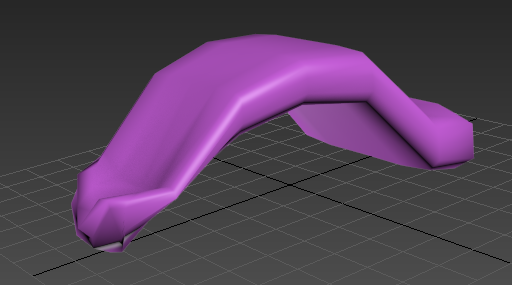
My tongue seems to take on this arc shape, with a slight u-shape at the tip of the tongue, however it doesn’t touch the holes and rather “guides” the air I think, and I’m playing from the side of my mouth - usually from the left.
Yep, that’s “U-blocking.” Norton Buffalo used it. @KeroroRinChou did you say Terry McMillan was a u-blocker?
Anyways, Norton alone is proof enough that it can be done. I use to discourage people from doing it because I’ve had students who struggled SO MUCH ever getting a bend using that technique. But once I found out Norton did it, I couldn’t in good conscience tell people not to do it, lol.
Terry didn’t U-block. He was a lip purser/pucker player. Come to think of it, it was actually T.J. Klay who told me that about Terry.
1 Like
OK cool thanks for getting that clarified for me. He held the harmonica upside down, I think that’s the weird thing I’m remembering.
I’ve seen this video on tongue-blocking many times, and watching just now, I saw something I had missed before: tongue-blocking and lip-blocking are two different techniques! I somehow thought they were different terms for the same thing! I’ve been using lip-blocking for trills and split shakes. I should try tongue-blocking for split shakes—I can’t seem to get the sound right by using my hands to create the shake. Thanks, @Luke !
1 Like
It’s impossible to play a split shake without tongue blocking. You need your tongue to block at least one hole in the middle in order for it to be a “split.”
A regular shake, I call a “trill” in my beginner to boss course Play it on two adjacent holes can be played using lip blocking, as it often is and shaking the hand or head. It can also be played tongue blocking, blocking the holes to the left of the two that you’re drilling on and shaking the hand or the head.
And a final way that it can be played, which I’ve only just started doing is the way Sonny Terry did it which is using lip blocking to isolate the two holes and using the tongue to switch back-and-forth between them. It’s a really sweet, smooth, slippery sound and one of the really nice things about it is it’s very easy to it with hand wah in a cool way (which you can’t really do if you’re shaking your head and or hands.)
1 Like
Thanks, @Luke ! I guess I was confusing the split shake with the trill; I thought they were done the same way. Your explanation of the split shake is very helpful! I will be working on that and also my trill, which still needs work.
Sonny Terry’s technique is interesting! I will give that a shot, but with only two holes to work with, I’m sure it’s more difficult than that split shake. I expect I won’t be able to get a handle on it until I can do split shake fairly well.
Thanks very much for the detailed info.! You’re the best!!
My personal experience has been that the Sonny Terry method is super easy compared to the split shake – but maybe for some people it is just the opposite !
1 Like
Good to know, @Carlos1 . Thanks!
1 Like
Yeah for me split-3 shakes came easier than tongue-trill on 2 adjacent holes a la Sonny Terry. But the tongue-trill is finally starting to feel comfy after a couple of months of staying after it…
As I mentioned before, what’s so cool about it is that you really aren’t a much easier position to be able to add hand wah so if you’re playing acoustically, it’s a real winner.
1 Like