Try this and let me know if it’s any good for you.
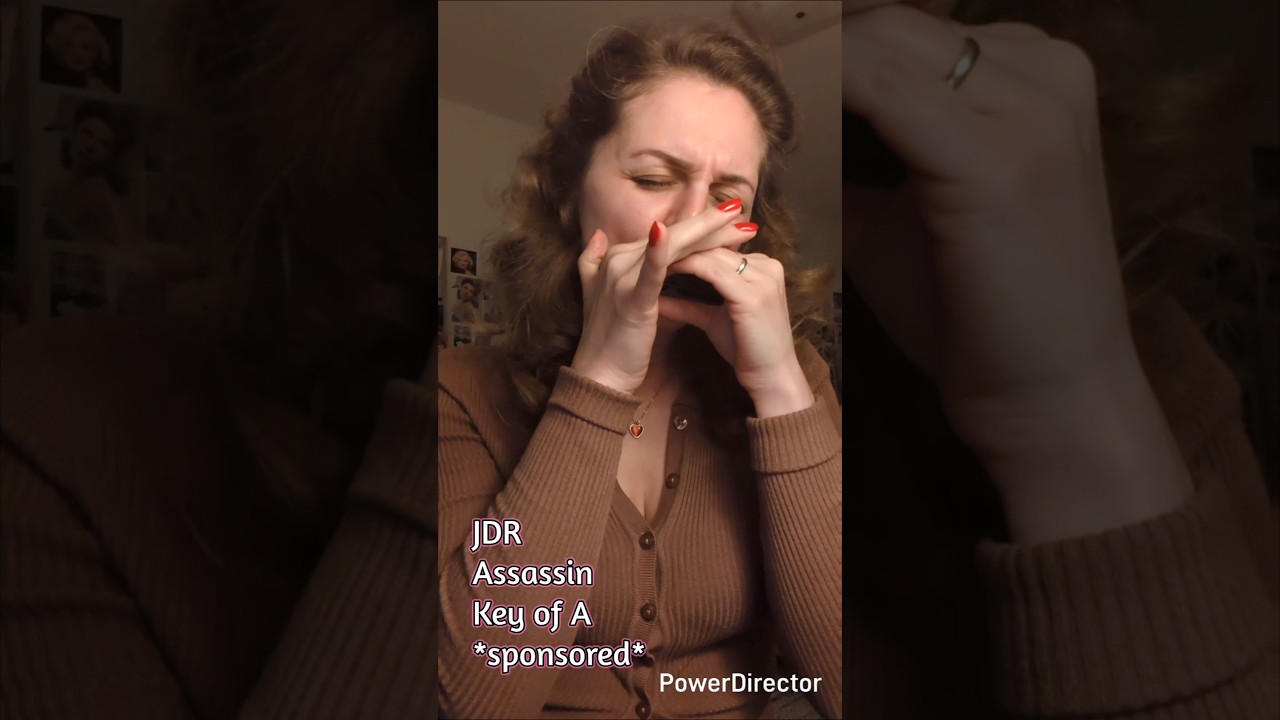
Try this and let me know if it’s any good for you.
Yep, that worked for me. Thanks for posting.
Vaibrato?
Yessss!!!
Curiosly I discover that technique by myself trying to do the throat vibratto, and thought that I was cheating…
But if sounds good, it’s good!!
Yep I use it all the time. So did Sonny Terry imo!
Iana is actually a Facebook friend of mine. She’s a harmonica player from Russia and absolutely loves vintage fashion alongside the harmonica. We talk to each other sometimes and she’s been super kind towards me.
Nice but I still find it hard while tongue blocking… Hard to articulate anything while tongue blocking
By the way, like for throat vibrato, she’s also bending, right?
Yep! She’s bending. Vibrato = fluctuation in pitch.
In the end as I have switched my playing to tongue blocking, I don’t find that technique easier but can see it’s use if puckering. But what I struggle with the most with throat vibrato is not the throat inhale. With enough relentless daily practice it works. The difficulty is the speed as @Luke you are explaining here https://www.youtube.com/watch?v=PMKibN0V6IM&t=126s I can now do confidently 5 coughs per beat at 60 bpm but 6 remains out of reach so far.
I know that my trick for learning throat vibrato, although I did a teacher help me out with it, is to lower my jaw in order to relax my throat and not take the “coughing” part literally, but instead use a glottal stop. I remember that when I started learning vibrato, I took the “backwards cough” analogy literally by thinking it was an inhaled cough. This ended up in me feeling lightheaded and actually coughing right afterwards. That whole situation made me believe that I couldn’t learn throat vibrato for years until I started my lessons with Todd Parrott.
I know that the way I teach throat vibrato to others is that it has to do with relaxing your throat. Even if you’re a tongue-based embouchre player (regular tongue blocking or u blocking), relaxing your throat and steadily breathing from the diaphragm is quintessential to the technique in my opinion. After focusing on my diaphragmatic breathing, I start with my embouchure by having the tall and rounded lip shape with a lowered jaw. The reason why I lower my jaw is to not only have a “big” harmonica tone, but also to put the throat into this neutral and relaxed position as preparation for the vibrato. This is especially important when I’m u-blocking, but it also works for pucker playing as well. While keeping this relaxed embouchure, I add some pressure by lightly pulsating my larynx as if I’m drinking from a bottle to create my signature throat vibrato.
When it comes to using a metronome to get throat vibrato down, I actually start around 120 bpm. I divide the sections into quarter notes, eighth notes, then sixteenth notes both with and without the metronome. Eventually, I stopped using the metronome when practicing vibrato and I continued to improve at it. Just so you know that every technique you’ll learn takes time to acquire. Don’t beat yourself up if you don’t get it right away. It’s perfectly normal for that to happen. Trust me, I know how that feels to not get a technique down immediately.
@KeroroRinChou thank you for the tip. I am not there yet but my intuition is that whether it is the backward coughing technique or the throat glottal stop or the yuh articulations, these are mental models people use to practice and start with but eventually all converge to the same thing. Again I might be wrong, but it feels to me that what the backward coughing does, in the end is making the throat vibrate. Especially as I try to increase speed using the coughing technique, it feels to me that the only way to achieve that is to focus on the throat and not on coughing faster.
Good advice on the relaxed lower jaw. I will try to pay attention to it.
And I am not beating myself up if I don’t get it right away. I heard somewhere that at the conservatory it takes 2 years to violinists to learn the vibrato and I am sure they practice more than I do…
You know what’s weird regarding my vibrato technique? My lessons with Todd Parrott helped me out a lot when it came to improving my harmonica tone with the tall, rounded lip shape and lowered jaw, but I feel like the tone improvement shaped how my throat vibrato sounds. The way that my throat vibrato involves the throat being relaxed and how I teach it came from a very unlikely source.
Recently, I was watching this video of one of my favorite voice actors/singers at a Q&A panel he did a few years ago. For those who don’t know, Ryan Drummond was the first video game voice actor for Sonic the Hedgehog and sang in an acapella group called The AYU Quartet (yes, acapella music is a guilty pleasure of mine). There was something he mentioned when he was asked if he ever hurt his voice while voice acting that I have since applied to how I teach throat vibrato to others.

Even though that might not seem applicable to harmonica players right away, I thought about it for a while and I actually believe that the “crying baby” analogy would actually make perfect sense to our instrument in terms of throat vibrato.
As beginners, we were often told that we should not play the harmonica with a lot of tension. I still vividly remember watching YouTube tutorials when I first started playing about how our embouchure and breathing technique both need to be relaxed while we’re playing. However, I’ve noticed that talk about relaxing the body is thrown out the window when talking about throat vibrato. The “backwards cough” explanation that’s often told to others for learning throat vibrato doesn’t involve the pulses in the throat being relaxed. In fact, it’s encouraged for the pulses to not be relaxed. For some people who want a more aggressive sound to their throat vibrato might want that, but it won’t work for others.
When I noticed the change in my harmonica tone since I started lowering my jaw while playing, I noticed that my throat vibrato sounded heavier (the pitch shifts were more evident than without the lowered jaw). So this could apply to the whole “relaxing the throat” principal I mentioned earlier in the thread, as the jaw being in this position neutralizes the throat into a relaxed state. But hey, what do I know? I’m just a harmonica geek that likes to overthink things.